SKIRMISH AT FALMOUTH – U. S. CIVIL WAR
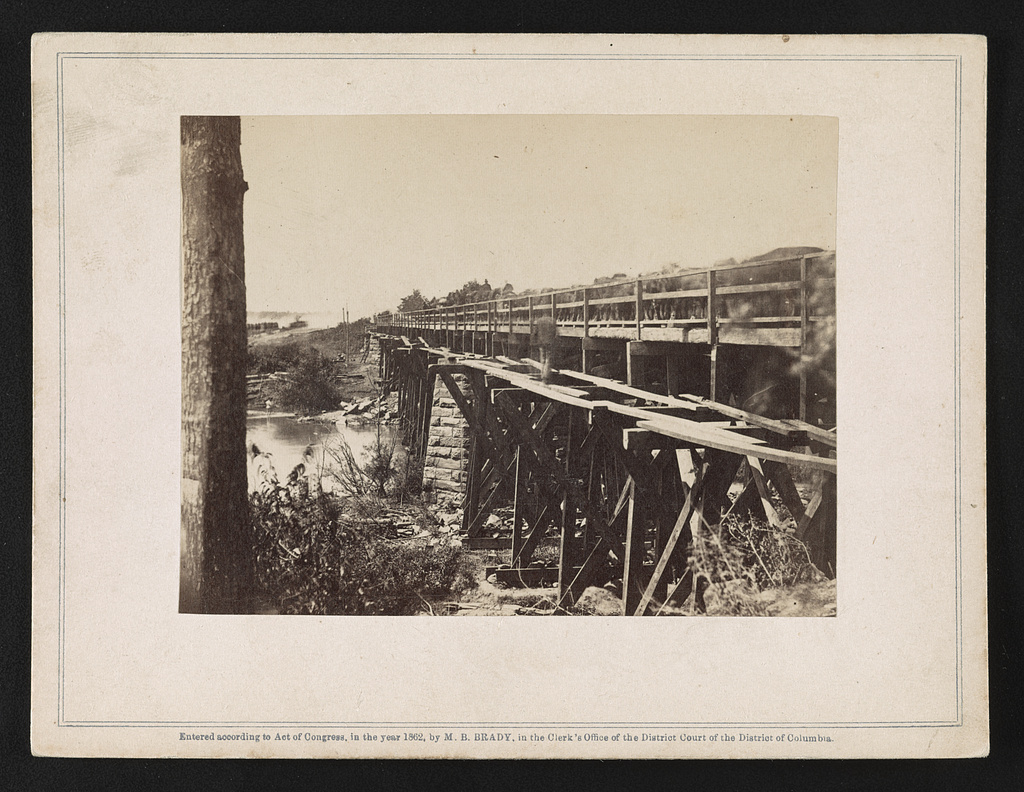
Unseasonably hot and muggy during the day, and frosty, bone-chilling cold at night, defined the weather at Falmouth, Virginia on the days surrounding Friday, April 18, 1862. The extreme temperatures for this part of the country were causing fatigue and exhaustion as woolen-uniformed Union troops marched 26 miles toward Falmouth, Virginia, armed with a mission to secure the Rappahannock River bridges that led to Fredericksburg, before they could be burned or fortified by the Confederates. On Thursday, six miles from Falmouth, the Union Army encountered Confederate pickets (men assigned to observe troop movements), and wounded a few of them as they were retreating to report the impending attack. Arriving at Falmouth in the middle of the night, the troops of Company E, 1st Pennsylvania Cavalry, alongside the 2nd New York Cavalry (Harris Light Cavalry), barely had time to rest before they were called to service just a few hours later. The nighttime march necessitated a ban on campfires, which would have normally provided heat, a warm meal, and boiled water for coffee and tea. Sergeant Jesse Fry (1818-1884), my paternal 3rd-great-grandfather, and Pvt. William Grassmire (1843-1929), his nephew, were among the farmers and laborers from Pennsylvania, mustered to form Company E, under the command of General Irvin McDowell and Colonel George D. Bayard. Staging themselves at the edge of town, Union soldiers patiently waited for the orders to attack. At 2 a.m., the command was issued to march towards the north shore of the Rappahannock at Falmouth. Horses and troops marched as silently as possible until they reached the area near the bridge.
Unbeknownst to Union forces, infantrymen of the 40th Virginia were defending Falmouth on the north side of the bridge, just 50 yards away from the Union troops. Reinforcements were placed on the south side, heavily armed and ready for battle. The Confederate army had barricaded the road and positioned themselves on a protected hill in Falmouth, fortified with troops and artillery, and defended with entrenched infantry and flanking cavalry. Pickets were in place and monitoring Union forces. To maintain the element of surprise and inflict the most damage, Confederate front-line infantry were ordered not to shoot until Union soldiers were just yards away from them. The Confederate army’s advance preparation guaranteed that this bridge capture would not be as easy as the Union planned.
The Union cavalry approached the bridge area, expecting to encounter a few pickets. Instead, as the leading troopers closed to just 20 paces, a wall of fire erupted from the muzzles of the Confederate muskets. For two to three minutes, the air is filled with smoke, screaming horses, and deafening volleys as the Confederates deliver round after round into the startled and confused Union ranks. Despite the devastating carnage, the Union cavalry fought to hold its ground, exchanging shots before the overwhelming fire of the entrenched position forced them to pull back. As the Union forces retreated, Confederate artillery opened fire from the hills above Falmouth, shooting at and shelling the withdrawing troops.
Despite the ambush, General Irvin McDowell’s forces ultimately secured the area. In retreat, Confederate forces burned the bridge and surrounding assets. After the battle, Union troops occupied Falmouth and the northern bank of the Rappahannock over the following days, turning it into a staging ground for future engagements in Virginia.
Colonel Bayard made the following report of the encounter, in a letter addressed to A. G. Curtin, the Governor of the State of Pennsylvania. Jesse was recognized as acting with courage. Ironically, before the election to governor, A. G. Curtin lived just a few miles from Jesse in Centre County. His family owned and operated the Curtin Iron Works between Howard and Milesburg, Pennsylvania.
Camp at Falmouth, Va., April 20, 1862.
Sir : —I have the honor to’ report that on the morning of the 18th I was ordered, with one battalion of the First Pennsylvania cavalry, and seven companies of the Harris Light cavalry, to take possession of the bridge leading from this place across the Rappahannock, and hold it until General Augur, commanding a brigade, came up.
I started at two o’clock in the morning, and about four I reached the
vicinity of the enemy. They were posted on a high hill, with a brush on either side of the road, and had erected heavy barricades of rails across the road. Ignorant of these obstructions, as soon as their pickets were driven in, I ordered Colonel Owen Jones, commanding the battalion of the First Pennsylvania cavalry, to move forward and seize the bridge at all hazard. He moved forward at a rapid gait, and as soon as he reached the vicinity of the barricades, a very heavy infantry fire was opened upon him. Captain Richard’s company M, and Captain Davidson’s company reacted with the utmost gallantry. Captain M. L. French, of company E, and Sergeant Jesse Fry, of same company, with Lieutenant William Bayard, adjutant of the second battalion, all acted with courage. Captain Davidson was taken prisoner, but finally captured the man who
had charge of him, and brought him and his horse into camp. Lieutenant Sample, of Captain Richard’s company, had his horse killed. Lieutenant Leaf, of same company, acted throughout the affair with bravery, whilst the good conduct of Captain Richards is spoken of in the highest terms by Colonel Jones. Of Colonel Jones it is sufficient to say, that he rallied his men with the same coolness with which he led the advance under the withering fire opened upon him. A second charge of the Harris Light cavalry, led by myself, first made me aware of the obstructions in the road. I have since learned that behind the barricades were posted four hundred infantry, and in their rear, on
their flanks, were three or four companies of cavalry. Immediately after the affair, the enemy deserted the barricades, and I advanced with General Augur’s command in pursuit. That I lost so few men, I attribute to the darkness of the night, which caused the enemy to shoot too high. I had three men killed, nine wounded, and eleven horses killed, and five badly shot. It was quite a brisk little affair, and added to the confidence I have in the bravery of the men, and the good conduct of the officers of my regiment. I think, sir, you can trust this regiment.
I am, sir, very respectfully, Your obedient servant, GEO. D. BAYARD, Colonel Pennsylvania Cavalry.
To His Excellency Governor A. G. Curtin,
Harrisburg, Pa.
For Jesse Fry, his nephew William Grassmire, and the men of the 1st Pennsylvania Cavalry, the Skirmish at Falmouth was an early baptism by fire. Over the next year and a half, they would continue to serve as the eyes and ears of the army, undertaking exhausting picket duty, scouting missions, and engagements across Virginia.
Though the war years brought unbelievable hardships, marches, and cavalry raids, Jesse ultimately survived the Civil War, returning home to Centre County before his later years in Williamsport—a life defined by the same resilience he showed standing firm in the pre-dawn darkness at Falmouth.
NOTABLES FROM THE SKIRMISH
During the morning of the 18th, a man named John Washington had been working at the Shakespeare Hotel in Fredericksburg. Fearing for their lives, many of the white locals were fleeing the city after hearing of the Union occupation, so John embraced the opportunity to escape his enslavement. He briefly spoke to his owner, returned the keys to the owner’s wife, and began walking through Fredericksburg, enroute to the river along with two other men. Across the river, two soldiers ask if they wanted to cross; Washington agreed and crossed the river to freedom. This was a significant event, as the Rappahannock River was now perceived as the border to freedom from slavery.
Colonel George D. Bayard, the deeply respected leader of the Union cavalry brigade, was mortally wounded later in the year on December 13, 1862, during the Battle of Fredericksburg. While waiting for orders, a stray Confederate artillery shell crushed his hip and caused massive blood loss. He lived through the night and died the following day. Bayard was just shy of 27 years old and engaged to be married.
OTHER SIGNIFICANT EVENTS OF THE CIVIL WAR ON APRIL 18-19, 1862
The Bombardment of Forts Jackson and St. Philip (Louisiana): On April 18, 1862, Union Admiral David Farragut’s fleet opened a massive mortar bombardment on the Confederate forts guarding the approach to New Orleans up the Mississippi River—a crucial opening move that led to the capture of New Orleans days later.
The Battle of Fort Pulaski’s Aftermath (Georgia): Just a week prior, Union forces had successfully captured Fort Pulaski using rifled artillery, shifting the military focus in the Department of the South toward tightening the blockade along the Georgia and South Carolina coasts.
The Peninsula Campaign Unfolds: While the Army of the Potomac’s cavalry was clashing around the Rappahannock River in Virginia, General George B. McClellan’s main army was bogged down in the early stages of the bloody Siege of Yorktown on the Virginia Peninsula.
SOURCES AND LINKS
https://antietaminstitute.org/hrc/files/original/920e1388ff4722cfdf9be53f34274ece8152ae43.pdf
https://berks.pagenweb.org/oldberkssite/books/Lloyd/HistoryFirstPAReserveCavalry-Names3.html


Leave a Reply