
DEEP ROOTS IN PENNSYLVANIA
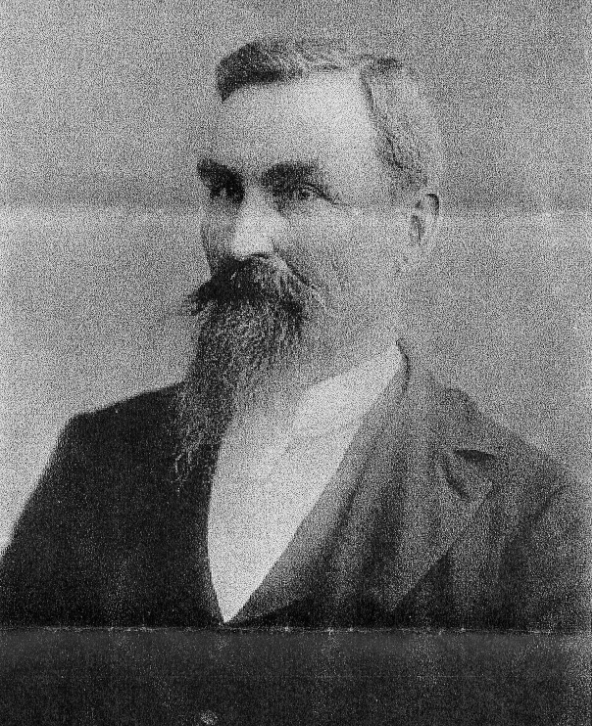
Berten Wallace Merritt was born on June 23, 1839, in Bradford County, Pennsylvania, into a family who pushed into the frontier of the Commonwealth. His grandfather, Hezekiah Merritt (1775-1820), had originally emigrated from England, bringing a pioneering spirit that clearly ran in the family. In fact, Berten’s grandfather holds the honor of being the very first white settler of Bradford County! He established himself so early in the region’s history that a prominent island in the Susquehanna River was named “Merritt’s Island” in his honor. Berten was later raised in neighboring Wyoming County by his parents, Elijah (1789-1874) and Jane Yearington Merritt (1802-1845), inheriting the family’s history of grit and resilience.
Growing up in a land that was just recently being cleared and developed in the mid-19th-century frontier meant that formal schooling was a luxury Berten didn’t have access to. Remarkably, he spent his entire youth without knowing how to read or write, only mastering those essential skills after he was married. What he lacked in early formal education, however, he more than made up for with a sharp, entrepreneurial mind and an unmatched work ethic. He proved that determination and common sense served him just as well as years in the classroom.
BUILDING A LUMBER EMPIRE
As a young man, Berten left home to seek his fortune in Centre County, starting from the ground up in the lumber subcontracting business under Judge Munson in Philipsburg. Having learned the basics of the trade, he ventured out on his own, purchasing a sawmill on Morgan Run. He successfully operated it for eight years before selling it to Samuel Mitchell.
With a determination to grow his wealth, Berten quickly looked for larger opportunities. He entered into a partnership with the firm Weaver & Betts, establishing B. Merritt & Co. Under this banner, they operated a large sawmill near Kylertown, positioning Berten as one of the region’s premier lumbermen.
FOUNDER OF WINBURNE, PENNSYLVANIA
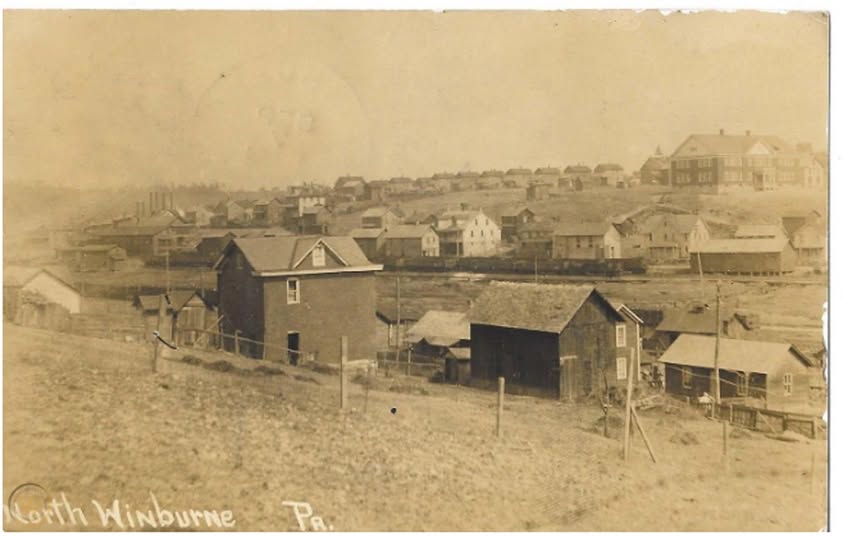
Berten’s most significant achievement came in 1886, when he ventured into purchasing 1,800 acres of undisturbed timber about a mile away from his sawmill in Kylertown, northeastern Clearfield County. He personally laid out the grid for a brand-new town, and moved his sawmill operations to the site. Curiously, the town was not named by Merritt; it was originally called Wynnburn, honoring a family who resided in the area, combined with the Scottish word for a small stream (“burn”). The original spelling was officially changed on October 5, 1889, when postmaster James L. Sommerville renamed the town Winburne.
The scale of his new operation grew tremendously, as he was very thorough in taking care of all aspects of his business enterprise. Regarding production, his mills quickly grew to cut an incredible 16,000 feet of lumber every single day. Berten constructed forty dwellings to house his growing workforce, and he opened a general merchandise store to supply the community’s needs.
The wilderness transformed almost overnight. The settlement grew into a thriving town, quickly reaching a population of about a thousand residents. Berten ensured the town wasn’t just a labor camp, but a true community—complete with a graded public school, a local gristmill, and three distinct churches (Presbyterian, Swedish, and Lutheran) to serve the diverse families moving to the area.
LUMBER? WHAT ABOUT THE COAL?
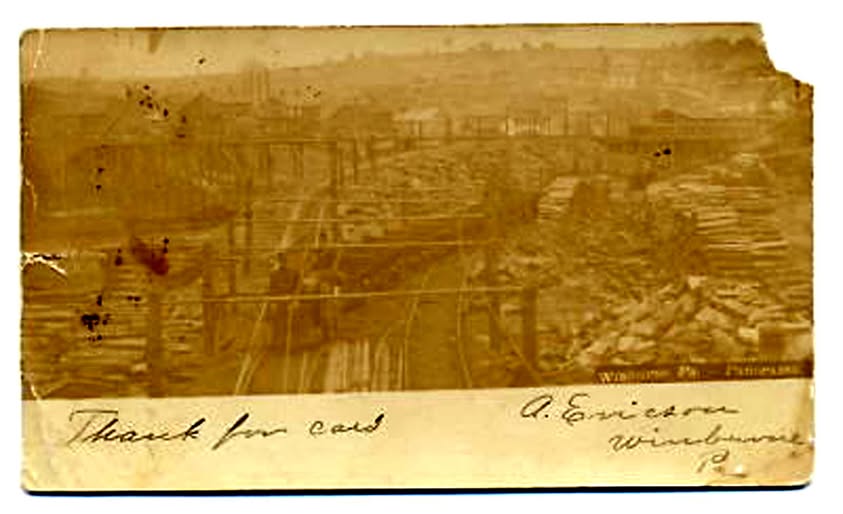
I briefly mentioned that James Sommerville was the postmaster, and named the town Winburne, but he did much more than that. James became an entrepreneur himself, working with Berten to transform the lumber town into a coal town. In 1885, the Beech Creek Railroad expansion finally stretched to Clearfield County’s Moshannon Valley. The rails provided the one thing the local coal industry desperately needed: a way to transport tons of bituminous coal out of the hills and into the eastern markets. In December 1886—just as the town was beginning to form—the Sommerville Company opened Winburne’s very first deep coal mine. Almost overnight, the focus of the area began to shift from the forests to the rich coal seams underground, eventually leading to major operations like the massive Ogle mines, which pulled up to a thousand tons of coal a day from the Lower Freeport vein. You may think that Berten’s best days were coming to an end, but conversely, he was absolutely right in the thick of it during this transition, acting as the bridge between the lumber and coal eras. Because he owned a staggering amount of land in the area and had moved his sawmill operations there in 1886, he was in a prime position to profit from coal as well as his lumber stock was depleted.
While Sommerville focused on engineering the rails and leasing the coal rights underground, Berten took charge of building the town above ground. He used his massive lumber mills to supply the timber needed to construct the early town grid, subdividing his land into lots to lay out organized streets. So, while Berten was a lumberman by trade rather than a mine operator, the coal boom couldn’t have happened without him. He quite literally provided the physical infrastructure and the wood that housed the mining community during Winburne’s sudden transformation.
THE KEYSTONE THREADS
What makes this era truly remarkable is how the threads of our family history were floating down the very same river. As Berten’s massive sawmills in Clearfield County were cutting thousands of feet of timber a day, many of those logs were launched directly into the West Branch of the Susquehanna River. Propelled by the high spring waters, that lumber traveled downstream straight to the giant log booms of Williamsport—the “Lumber Capital of the World.” There, on the receiving end of the timber boom, members of the Fry family were waiting. While Mitchell Fry was enduring the blistering heat of the iron furnaces as a puddler, other relatives were working in Williamsport’s booming furniture industry, turning that raw Pennsylvania timber into fine furniture. While the Merritts were clearing the wilderness upstream, the Frys were downstream helping to fuel the region’s industrial golden age.
MARRIAGE AND FAMILY NOTES
On the personal side, Berten’s life was anchored by his family. He was married twice, finding a true partner in his first wife, Catherine Coulter Merritt (1847-1885). Catherine was the daughter of John Coulter, a proud family line whose own father had emigrated from County Donegal, Ireland, to work in the Centre County iron works. He married his second wife, Emily Jane Dixon Merritt (1855-1929) in 1885. Berten Wallace Merritt passed on May 17, 1913 in Winburne. He is buried at the Kylertown Presbyterian Cemetery, near the site of his original sawmill.
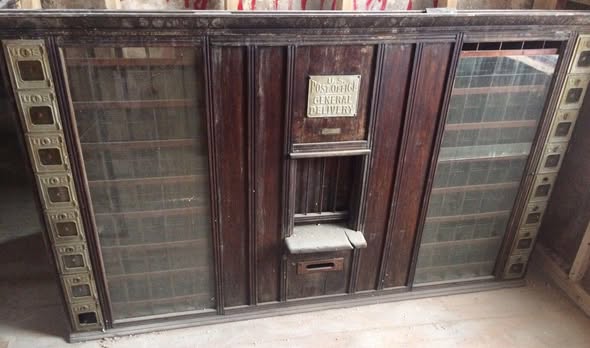
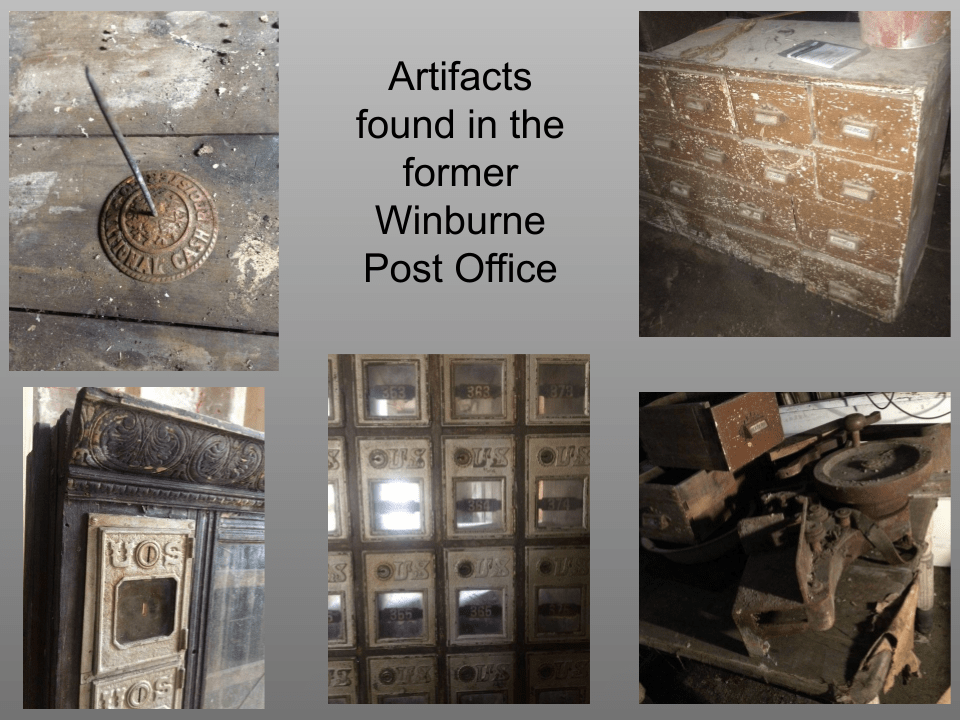
The legacy of Berten Merritt’s vision isn’t just confined to the history books; it remains a deeply personal part of our family’s story. Decades after Berten mapped out those wilderness roads, his fourth great-niece, my wife, was born and raised right there in Winburne. Generations of Merritts and Laichs, who settled in this area and married into the family, worked in the coal mines. In a remarkable historical blip, my wife’s sister purchased the old Winburne Post Office building, owning it for five or six years until around 2022. Though the post office itself had long been closed, the building served as an incredible time capsule, still holding many historical relics—including the original post office boxes from the town’s early days, signage from it’s time as a pharmacy/general store, and a doctor’s office.
A LIVING CONNECTION TO THE TOWN HE BUILT
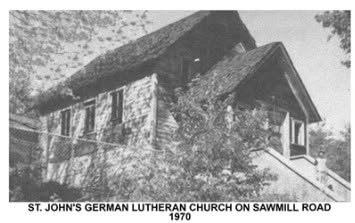
The spiritual center of this post highlights St. John’s Lutheran Church in neighboring Forest, PA. When the congregation first gathered in 1893, the surrounding landscape was famously described as a neighborhood of nothing but large tree stumps—a direct example of the intensive lumbering Berten and his crews had completed. The very timber he cleared opened the space and supplied the wood for the historic church where, decades later, my wife and I would be married in 2002, where we served as dedicated members, and where six generations of the Merritt/Laich family now peacefully rest.
The deep roots Berten planted in that pocket of Pennsylvania continued to shape the family for generations. After marrying at St. John’s, my wife and I made our home just up the hill in neighboring Lanse, building a beautiful life together there for twenty years. From a wilderness sawmill to the places our family has called home, the thread of the Merritt family history runs straight through the heart of these hills.
 Keystone Threads
Leave a comment