Jacob Gottschalk, my seventh great-grandfather, was the first residing Mennonite bishop in America. There is much written about him, as he is highly revered by the Mennonite people, so my post would like to tell the story surrounding this main point. How did he end up in America? Why did he come? How did he become a bishop? How did the spelling of the surname change?
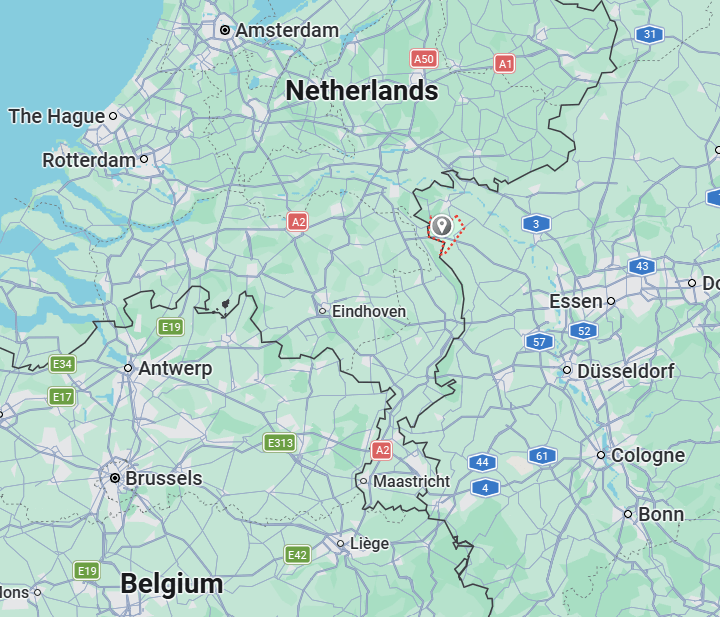
Jacob Gottschalk was the son of Thonis (Theunissen) Gaetschalck and Lehntgen Henricks, born ca. 1666 in the town of Goch, in the district of Kleve, on the modern-day border of the Netherlands and Germany. This Lower-Rhine region of Germany is heavily Dutch-influenced, both culturally and through language. Because of this, he was able to speak Dutch and is sometimes listed as Jacob Gaetschalck Van der Heggen, following Dutch naming conventions. Jacob was baptized on 7 Apr 1686, lived in this area as a woodworker, and married his wife Aeltien Hermans on 20 Feb 1689.
WILLIAM PENN
Most of us are aware that William Penn (1644-1718) was the founder of Pennsylvania. What you may not know was how Penn was able to convince European strangers to emigrate across the Atlantic Ocean to establish a home in an undeveloped land. Penn grew up in a wealthy household and lived a life of privilege, but he discovered the Quaker faith in his early twenties, then transitioned to advocate for religious freedom. Penn was thrown in prison multiple times for written attacks on the established religion. His father had disowned him for this change in beliefs and behavior, but relented on his deathbed. Penn’s father left him with a substantial endowment to claim from King Charles II, which would eventually develop into a land grant in the New World. He originally invested in land with other Quakers that encompassed western New Jersey, then was granted the land directly west-about 45,000 square miles. William Penn was now the largest non-royal landowner in the world! Wikipedia, William Penn
THE QUAKER’S PITCH
Now that he owned an expanse of land, Penn’s next mission was to populate it so he could build his fortune. His plan was to recruit Quakers from Europe, who were facing religious persecution for many years, to relocate to the New World. Before obtaining his massive piece of land, Penn had traveled through Holland and Germany on an evangelizing tour. He was a master of communication and building connections, and his “Holy Experiment” included the distribution of multilingual pamphlets and canvassing the Lower-Rhine region for recruits. The first wave of settlers traveled on the Concord in 1683 and established Germantown as a settlement for religious autonomy. William Penn’s mission would soon alter the course of Jacob Gottschalk’s life.
The promotional effort eventually reached Jacob. Word got back to Goch that Penn’s promises were real; the land had good soil and the government was not intrusive. After extensive preparation, and a dismissal letter from the Goch Mennonite congregation in 1701, the family made the trip down the Rhine River toward the Netherlands. This was not a leisurely cruise down the waterway. At this time, the river was “owned” by dozens of toll stations run by local nobles, making the journey arduous and expensive. All German and Dutch people destined for the New World embarked from Rotterdam, Netherlands, with a stop at an English port to clear British customs, as Pennsylvania was a British colony.
ARRIVAL IN GERMANTOWN
Jacob, Aeltien, and his young family arrived in Germantown, Pennsylvania in 1702. Surprisingly, the vibe of the town was familiar. Although Germantown was less than 20 years old, culturally it was much like home, except that the one-street town had recently been carved out of the wilderness. Most of the immigrants spoke either German or Dutch. The Mennonites didn’t have a physical church yet, and most likely met in each other’s homes for worship.
CASTING LOTS
On August 8, 1702, Jacob Gottschalk was barely acclimated to his new hometown when he was elected pastor by casting lots. This process, which removed any favoritism, politics, and personal motivation, was a deeply held tradition of early Anabaptists. The candidates had to demonstrate strong character, humility, and faith, be baptized, and members of the congregation. The church leadership placed a single slip of paper containing a Bible verse—often referencing Proverbs 16:33, ‘The lot is cast into the lap, but its every decision is from the Lord’—into one of the books. The books were then shuffled, and in total silence, the men opened their chosen book. The man who opened his volume to find the slip of paper was considered chosen by divine intervention to be the new preacher. In this instance, both Jacob Gottschalk and Hans Jacob Hirsch drew the books containing the slips of paper. The congregation viewed this as divine intervention and chose both as preachers.
THE BISHOP CRISIS
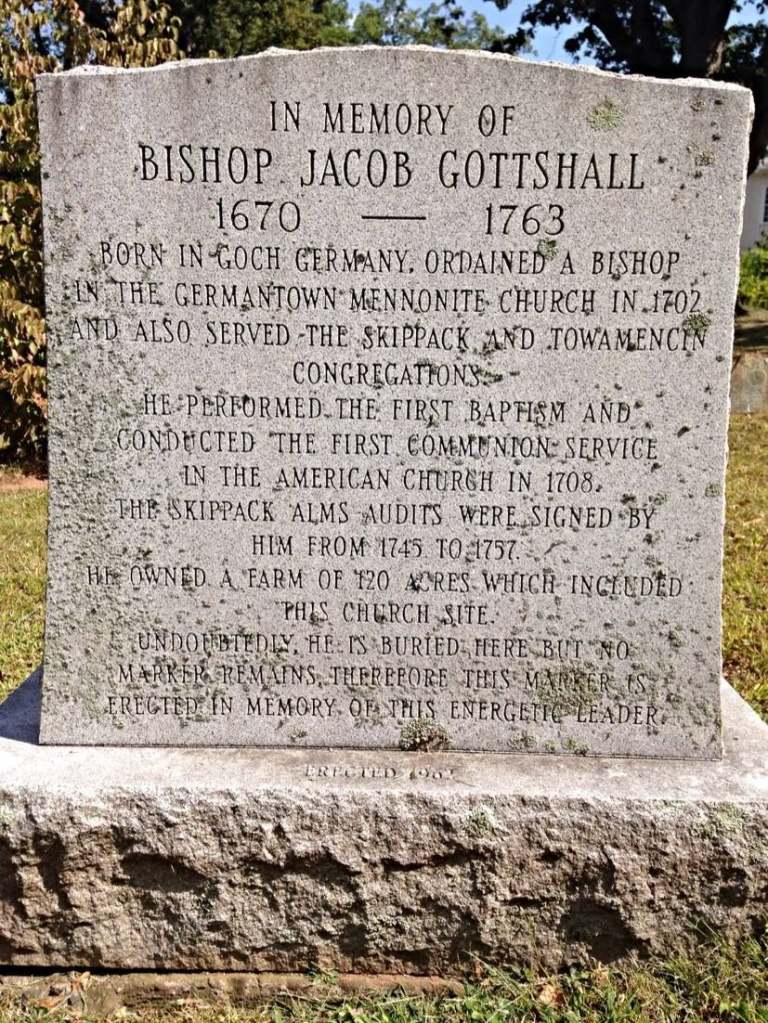
This new leadership team did not last very long, as Hans Jacob Hirsch, who cast lots with Jacob, lost interest and returned to Europe. Dirk Keyser, another prominent early leader, passed away, and William Rittenhouse, another early church leader, passed away in February 1708. On a side note, Keyser and Rittenhouse are also on our family tree, albeit through marriages. Within a few years, Jacob Gottschalk was on his own as the only Mennonite minister in North America. This created a problem, because Mennonite ministers could deliver sermons, but only a bishop could perform baptisms and communion. Letters were sent to the leadership in Europe, but were not returned until after Rittenhouse had passed. Jacob stepped up to fill the need, and with the blessing of the congregation, performed the first Mennonite baptisms in America in May 1708, baptizing 11 new members. A few days later, he administered communion to 34 people. Assuming this role by necessity, Gottschalk became the first residing Mennonite bishop in the New World.
MOVING TO THE FRONTIER: TOWAMENCIN (1708)
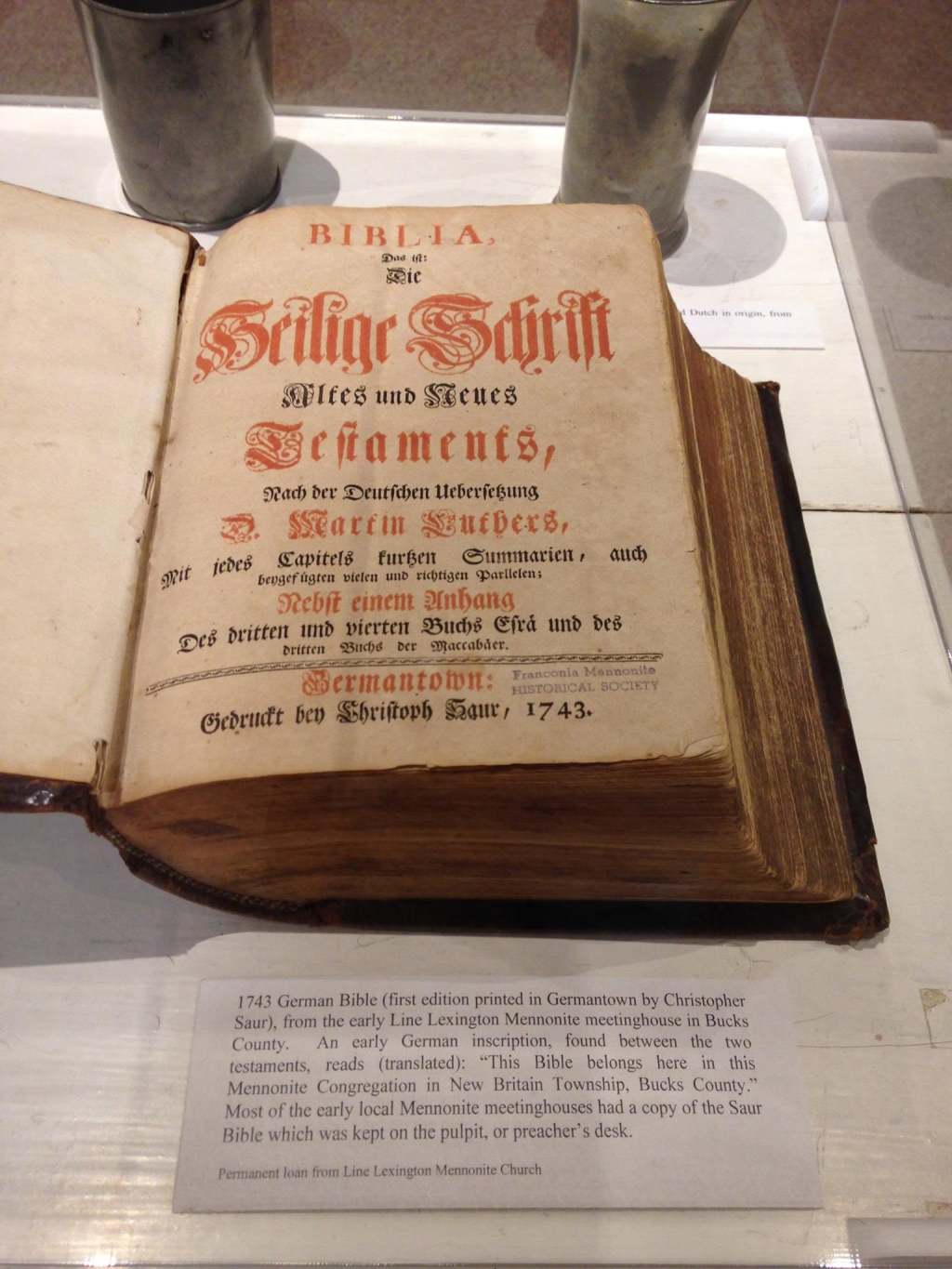
It’s hard to imagine living life in the new frontier with the responsibilities of a bishop of the entire Mennonite congregation. Jacob Gottschalk not only did this, but purchased 120 acres, twenty miles northwest of Germantown, and moved his entire family to a wilderness where he was the only white settler. He lived on the land, cleared it, and farmed for almost five years until the deed was officially recorded in 1713. Jacob continued to preach, but as he aged, his sons took over as the “tree clearers”. One of his most notable accomplishments was the English translation and printing of the Dordrecht Confession, a statement of Mennonite beliefs approved by church officials in 1632. He also was a master woodworker and worked as a weaver, providing the new colonists with clothing, furniture, and tools! Sidebar: This website is named Keystone Threads because he was the first of many weavers in the family. He continued to purchase land in the surrounding area, buying 120 acres for Godshalk Godshalk, his son, and another 123 acres as an investment property. Jacob became one of the largest landowners in the area.
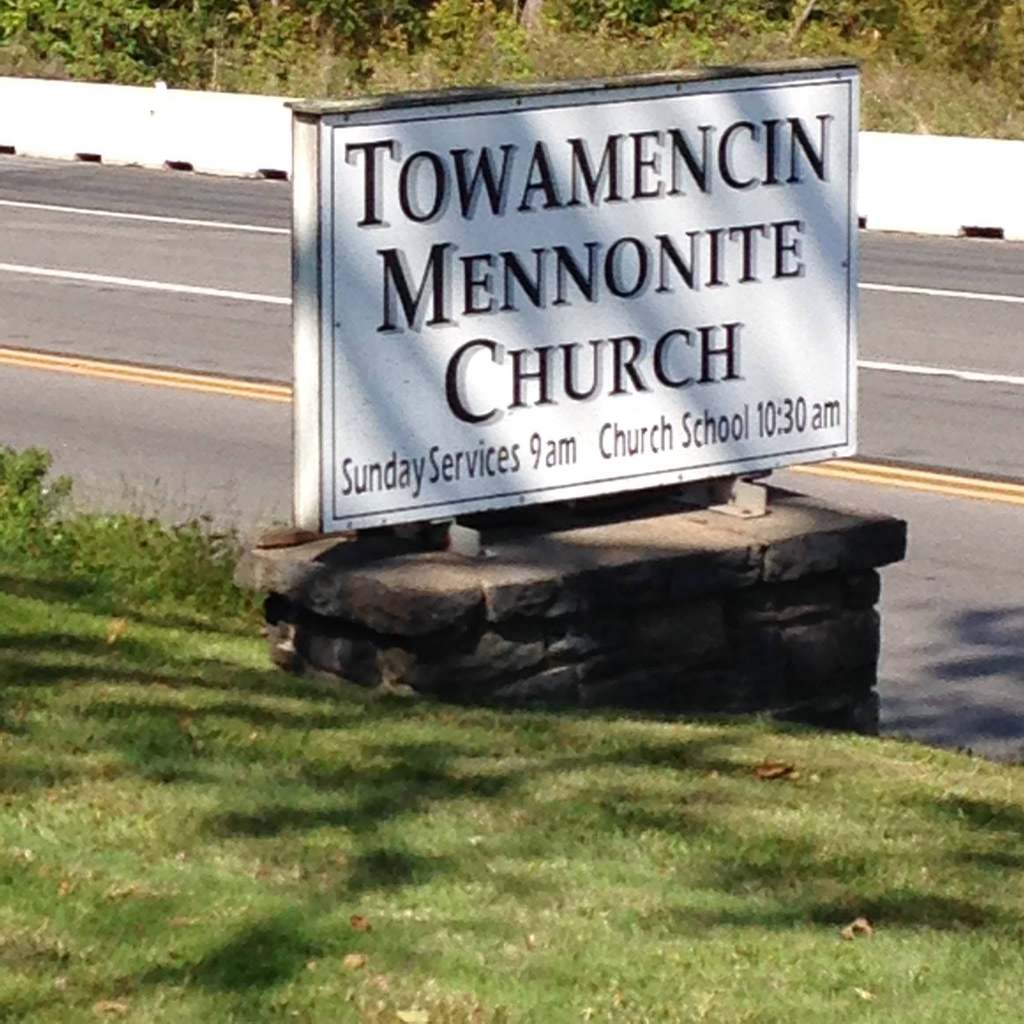
Jacob lived a long life, especially for a person living in the 1700s, and died in May 1763 at about 95 years old! His last will and testament, written on 26 Dec 1760, divided his German and Dutch religious books as well as his land. He provided for his daughters as well as his sons, living up to the tenets of fairness and equality for all, a tenant of the Mennonite faith. He is buried somewhere on the grounds of Towamencin Mennonite Church, on the property he previously owned.
SPELL CHECK! THE SHIFT TO GODSHALK
Nowadays, there are numerous variations of the surname Gottschalk. You may have noticed the changes in this article, beginning with Gaetschalck, transitioning to Gottschalk, then to Godshalk. A lot has to do with pronunciation in English, interacting with public officials in Philadelphia, and family reasons. Jacob’s children dropped the earlier versions in favor of “Godshalk”, and the name has evolved in many directions since then. Our family settled on Gottshall, but there are variations along the line, even among brothers and sisters in the same family.
JACOB’S CHILDREN AND THEIR SPOUSES
| Child | Born | Died | Notes / Spouse |
| Thonis (Deany) Godshalk | c. 1689 (Goch, Germany) | 17 August 1747 (Towamencin, PA) | Married Magdalena, widow of a Gaetzchalck in Goch. He was a weaver and inherited part of the homestead. |
| Hermans Godshalk | c. 1691 (Goch, Germany) | c. 1749 (Franconia, PA) | Married Agnes Kindig. |
| John Godshalk | c. 1693 (Goch, Germany) | c. 1769 (Lower Salford, PA) | Married Helena Janzen. |
| Godshalk Godshalk | c. 1695 (Goch, Germany) | c. 1748 (Towamencin, PA) | Married peak-period pioneer family member, Mary. Jacob bought him 120 acres in Towamencin. |
| Ann Godshalk | c. 1700 (Goch, Germany) | After 1760 (Pennsylvania) | Married Peter Tyson (Theisen). Documented in Jacob’s 1760 will. |
| Magdalena Godshalk | c. 1705 (Germantown, PA) | After 1760 (Pennsylvania) | One of the first children born in America. Married John Cassel. |
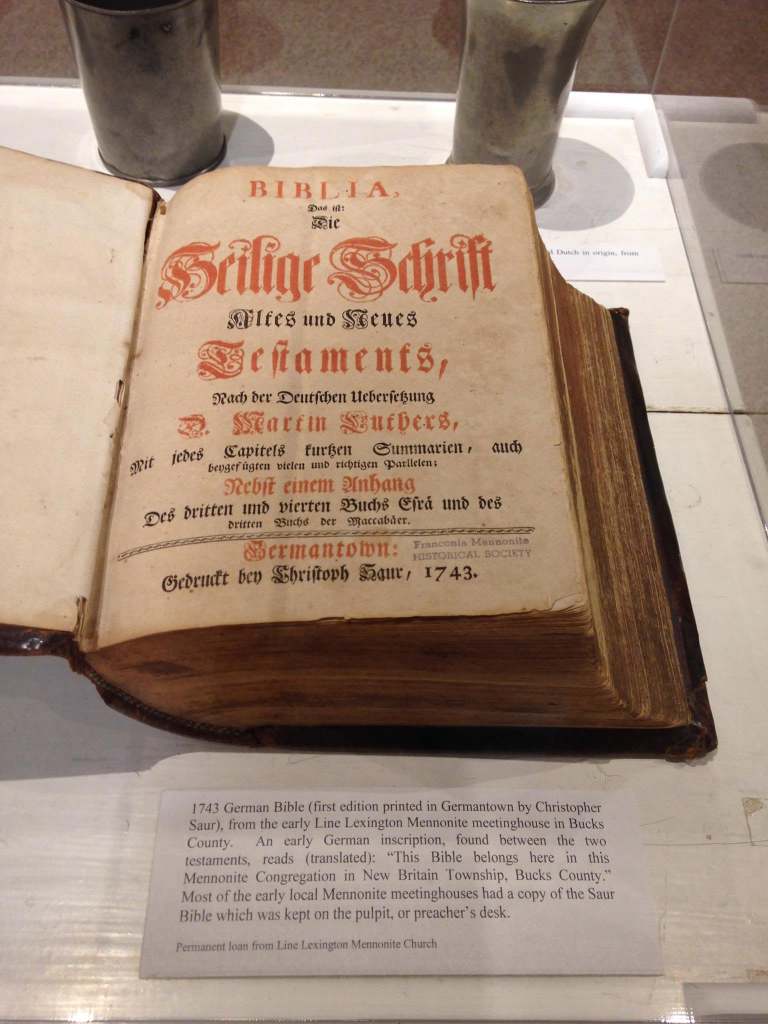
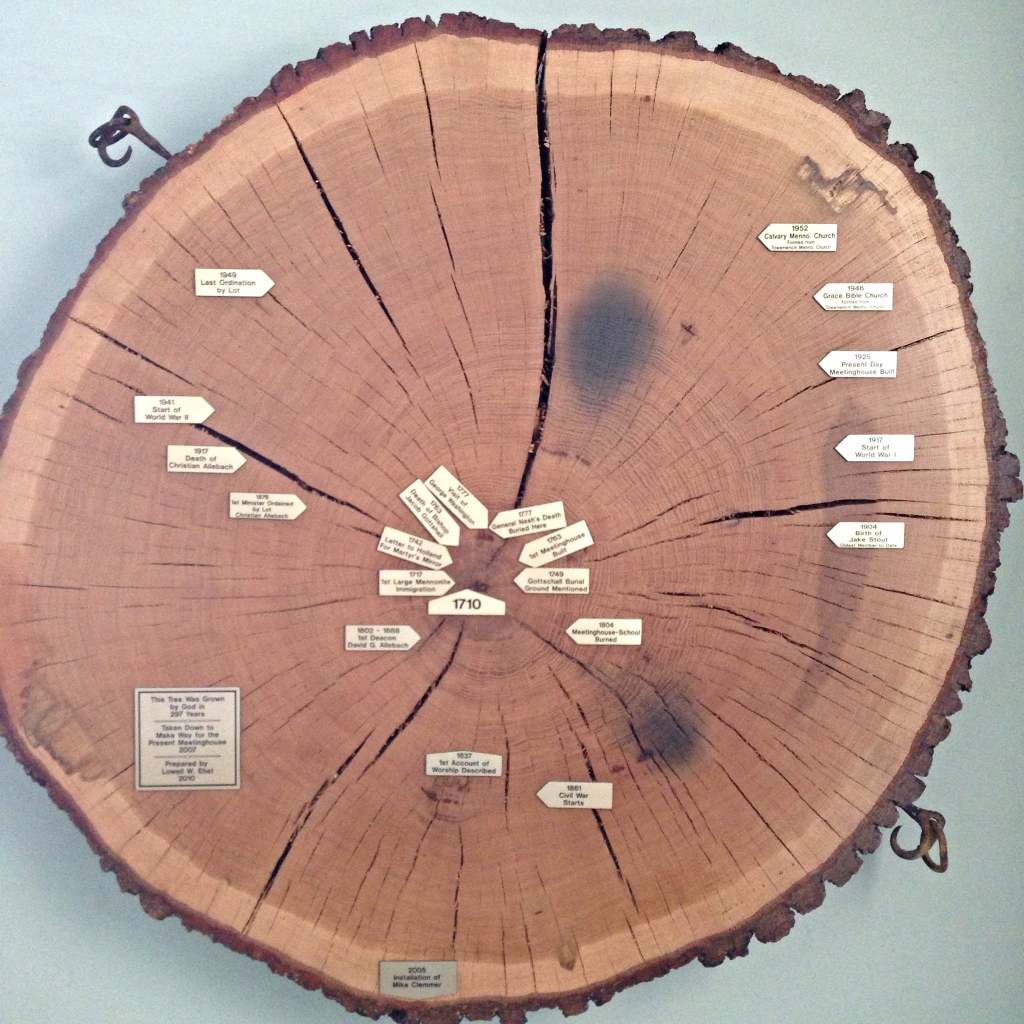
PHOTOS FROM MY VISIT TO TOWAMENCIN


Leave a Reply